

07
Jaipur
3 days
We arrive on the busy streets of Jaipur after a six-hour bus ride. The sleeper bus was surprisingly comfortable in our double bunk with sliding door. On our walk to the hotel we can immediately sense how busy the city is, the warmth and smell of the food stalls.
On our first morning we walk to the pink city. The city walls were painted a dusty pink in honour of the visit of prince Albert in 1876. The original pastel yellow is still visible on the inner walls. The roads are everything you would expect of India: loud, busy and dusty. A row of stalls showcases marigold wreaths that are being made on the spot. The main streets are lined with small shops. At this time of day, the merchants are still at home and the shopping arcade is still empty apart from the occasional sleeping cow. We see the rare cowpat. And a couple of meters later we see the reason why the streets are so clean: a hardworking man sweeps the cow dung in his cart before the city comes alive.
We visit the fairytale-like city palace with a friendly guide who gives a great and extensive explanation about the Maharajas, their refined traditional dress and extravagant weapon collection. This might sound boring but the Indians have a way of making even the blandest utensil a work of art.
On the plane I briefly talked to my neighbours and the girl kindly wrote down some recommendations for Jaipur. Her husband, next to me, grew up there and obviously knows all the ins and outs of the city. We follow her instructions and head for the Khadi shops.
As if by magic, the Indian-British couple is having lunch at the place where we stop for a coffee. He explains that Indian Coffee House is an institute in Jaipur. As India is a tea country, it used to be the only coffee place in Jaipur and art students and journalists came here to fuel up on caffeine and to work. It is a cheap eat. There is a second Indian coffee house in the Jawahar Kala Kendra, a place that was also recommended to us by the Indian-English couple. It is the ideal place to escape from the busy old center.
They accompany us to the Khadi shops and explain the importance of these for India’s struggle for independence. As colonialism destroyed India’s textile market, Gandhi used handwoven cloth as a key factor to make India financially independent.The textiles are made from natural fibres and woven on handlooms. All the products in the Khadi shops are handmade in rural villages.
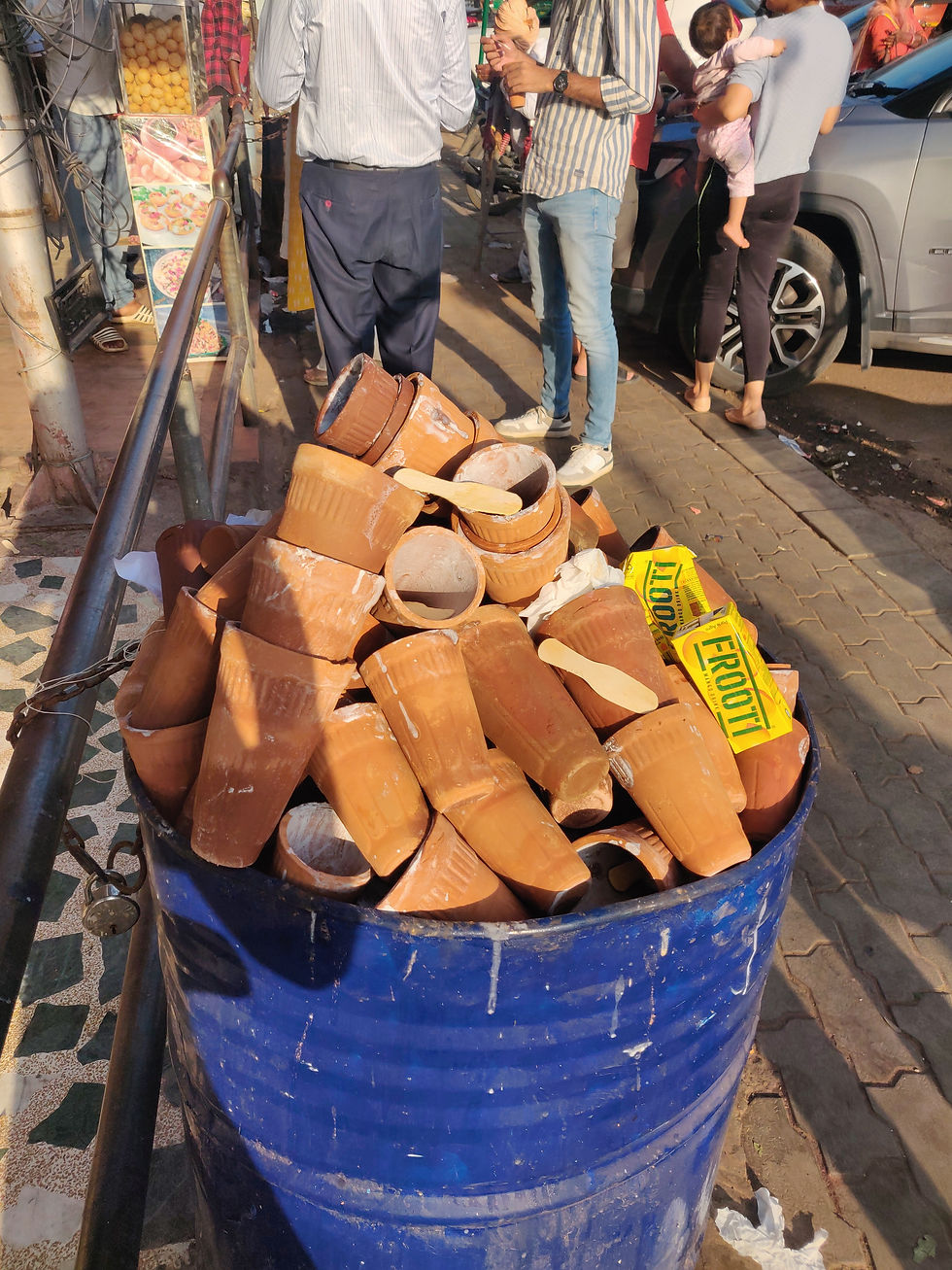
The street has a couple of lassi tents next to each other where a constant stream of people gathers on the pavement. Lassiwala is supposed to be the best out of the three and sells out the fastest. The lassis are served in single use terracotta cups which I suppose are then recycled. Without a doubt the best lassis we had were on this road.
For dinner, we walk to Masala Chowk. A small entrance fee of 10 rupee gives us access to the food court. As our knowledge of Indian streetfood is still very limited, our strategy is to shamelessly pry around what looks good and ask people what they ordered. Though rather obnoxious it does lead us to the discovery of alloo tikki chaat.


We spend our second morning at the Jantar Mantar. A seemingly modernist observatory built in the 18th century. The site houses several ingenious astronomical instruments to measure time, constellations, celestial bodies, …. Our comprehension did not go beyond the sundial, but that did not detract from the charm of the place.
It takes us half an hour in an auto rickshaw to get to the Jawahar Kala Kendra. The area feels more suburban with modernist houses owned by doctors and dentists.
Veiled ladies are sweeping the floors of the art centre. In the nineties some ill-fitting modifications were made to the building but if you can ignore those, it is absolutely wonderful.
What first strikes us, is the calmness of the place. a rarity in India's big cities. No one will ask you for a picture here. We admire the buildings, the gardens and have a coffee at the Indian Coffee House branch.
Our bus leaves at midnight so this gives us the ideal time frame to go see a Bollywood movie. The Raj Mandir was founded in the seventies and combines some typical wooden seventies features with meringue-like plasterwork. The lobby room with its bar and imperial staircase reminds of a cruise ship.
In true bollywood fashion, the movie was very dramatic. Although the movie is in Hindi and there were no subtitles, the simple plot and English words that sneak in now and then, made it easy for us to follow the story. Another big guidance was the reactions from the emotional crowd that ended the movie with a huge applause.