


02
Road to Leh
2 days
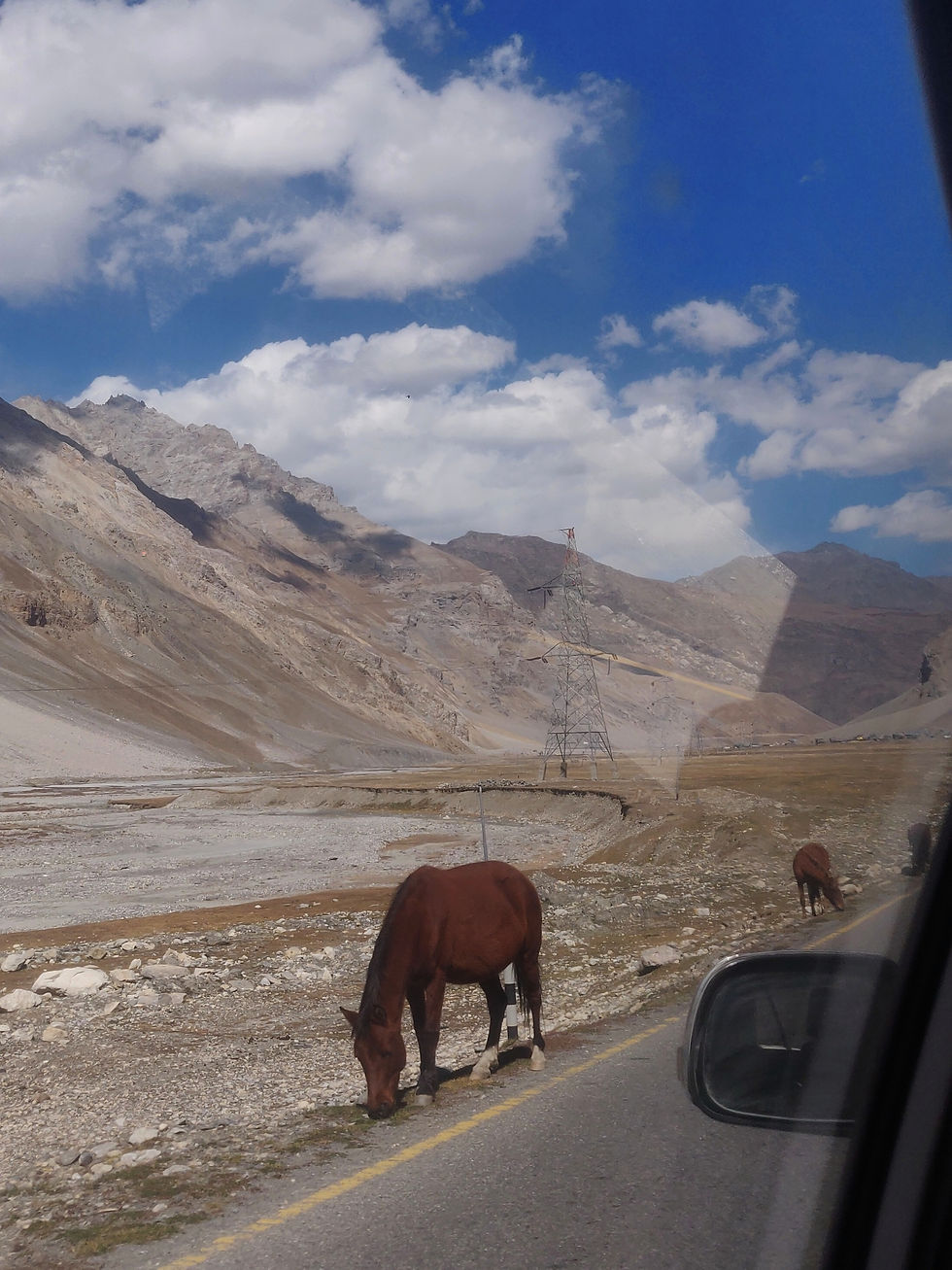
On a sunny morning we leave for our two-day drive through the Kashmir Valley, into the Himalayas and to the capital of Ladakh: Leh. We share the road with shepherds and their herds, kids eagerly waiting for the lavishly decorated schoolbus, scooters transporting stacks of plastic chairs.
After our first quick stop at Sonamarg, we cross the legendary Zoji La on the border between Jammu & Kashmir and Ladakh. Thanks to our calm and collected driver, I only learned afterwards that this is one of the world's most dangerous passes. It is no more than a one-lane dirt road, usually adorned with queues of waiting trucks. The Zoji La tunnel is still under construction when we drive the hairpin bends. As this is the sole connecting road between Ladakh and the Kashmir valley, and the pass is covered in snow half the year, this tunnel will have a major impact on the Ladakhi people.
Border Roads Organisation (BRO) is responsible for the maintenance and construction of the roads we travel. Next to safe and extremely comfortable roads, BRO also kept us entertained with their inspiring slogans along the road that are meant to encourage slow and safe driving: “Be gentle on my curves”, “If you love her, please divorce speed”, “Darling I like you, but not so fast”.
The road to Leh is spectacular. We were often told to come back in summer but I cannot imagine the views being any more beautiful than they are in autumn. The roadsides are coloured with yellow poplars and orange apricot trees while the mint blue river flanks the road. Although the typical tourist stops along the road are interesting and beautiful, the colours and the mountain views are what I enjoy most.
Husain usually decides where we stop for lunch. We eat mutton in Dras where a kind elderly man points out that Pakistan is just behind the mountains.


Our overnight stop is in Kargil, the second largest city in Ladakh, situated close to the line of control. Relatively recent, in 1999, Kargil fell victim to one of the deadliest clashes between Pakistan and India during the ongoing Kashmir conflict. Most people who have heard of it, associate Kargil with the war. Despite that devastating history, we found Kargil a beautiful place. During our walk in and around the charming city, we saw little shops, kids riding their bikes, young girls curiously glancing and giggling at us, women washing clothes in the streams that are ingeniously guided through many of these dry high-altitude cities.
The last day of our trip to Leh featured Lamayuru monastery, moon hill and the spectacular joining of the rivers Indus and Zanskar. We stop for for lunch in Khalsi in a tiny eatery run by two elderly brothers. The stainless steel tableware is filled with rice, dahl and curry eggs. When they see that our plates are empty, one of the brothers offers us seconds. A smile never leaves his face. Tip not included, we could have left this eatery for just 60 rupees (75 cents) per person.